How to Prepare Coffee Properly
Great coffee depends on more than just the right preparation method. The beans, grind size, water and temperature all influence the flavour of every cup.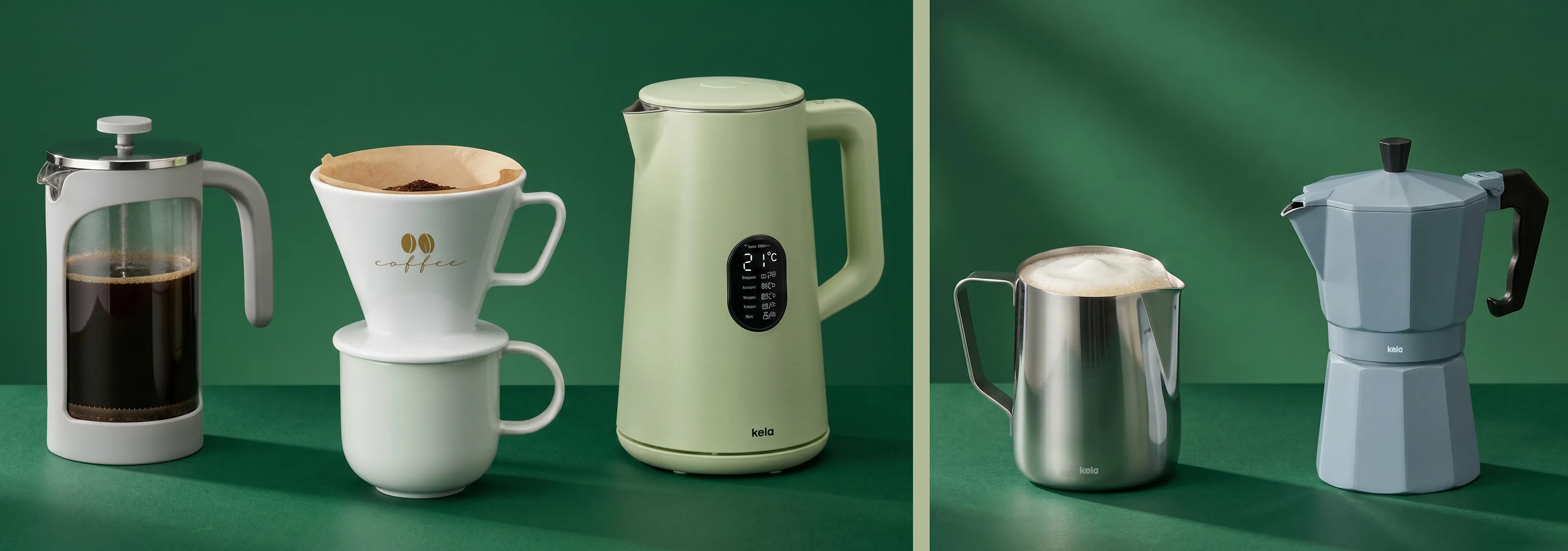
No products found.
Every Cup Starts with the Right Basics
Great coffee doesn't start with brewing. The choice of beans, grind size, water quality and the right dosage influence the aroma at least as much as the preparation method. By following a few basic tips, you can significantly improve the flavour of your coffee.
Good Coffee Beans as the Foundation
Good coffee starts with choosing the right beans. There is a wide range of whole beans and ground coffee available – from mild to full-bodied roasts. Which variety tastes best is largely a matter of personal preference. Whole beans retain their aroma for longer and only develop their full flavour when ground. However, if you don't have a coffee grinder, you can still achieve great results with pre-ground coffee. The important thing is to store coffee in a dry, dark place and in a tightly sealed container. Now it's time to experiment. Even a different roast or bean blend can noticeably change the flavour.
The Most Important Factors for Great Coffee
New beans or a different coffee machine are not always the solution. Often, it is the small details in the preparation that determine how the coffee ultimately tastes. The following factors play an important role.
The Right Grind Size
The grind size determines how quickly the water can extract the flavours from the coffee grounds. If the coffee is ground too finely, it often tastes bitter. If it is too coarse, the coffee tends to taste thin and lack aroma.
If you grind your coffee fresh at home, you can adjust the grind size to suit the preparation method. A medium grind is suitable for a pour-over coffee maker, a French press requires a slightly coarser grind, while coffee for a stovetop espresso maker should be somewhat finer. Many pre-ground coffees are also already tailored to specific preparation methods.
Water as a Flavour Factor
Water quality has a greater influence on the taste of coffee than many people realise. If the water contains a lot of limescale or has a strong taste of its own, this can also affect the flavour in the cup. In regions with very hard water, a water filter can improve the taste while also protecting coffee machines and kettles from limescale deposits.
Use fresh water whenever possible. This also applies to filtered water, which should not be stored in the filter jug for an extended period.
The Right Water Temperature
The temperature of the water influences which flavours are extracted from the coffee grounds. If the water is too hot, more bitter compounds can be extracted. If it is too cool, the coffee often tastes flat and lacks aroma.
For pour-over coffee and French press, a water temperature of around 92 to 96 °C is considered ideal. After boiling, it is usually sufficient to let the water stand for around 30 seconds before using it.
The Right Dosage
The right amount of coffee grounds ensures a balanced ratio between water and flavour. More coffee does not automatically mean more flavour. If the dosage is too high, the coffee can taste bitter. If it is too low, it often tastes thin and lacks aroma.
As a general guideline, around 6 to 8 grams of coffee grounds per 100 millilitres of water is recommended. Even small adjustments to the amount of coffee, grind size or choice of beans can often help you adapt the flavour to your personal preferences.
Which Coffee Preparation Method Is Right for You?
Each preparation method brings out the character of the coffee in its own way. While some methods highlight delicate, clean flavours, others create a stronger, more intense taste. Which one suits you best depends entirely on your personal preferences and how you enjoy your coffee in everyday life.
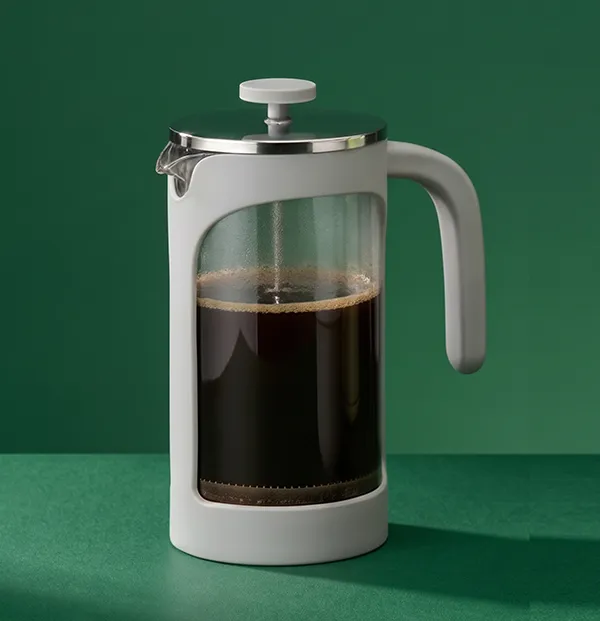
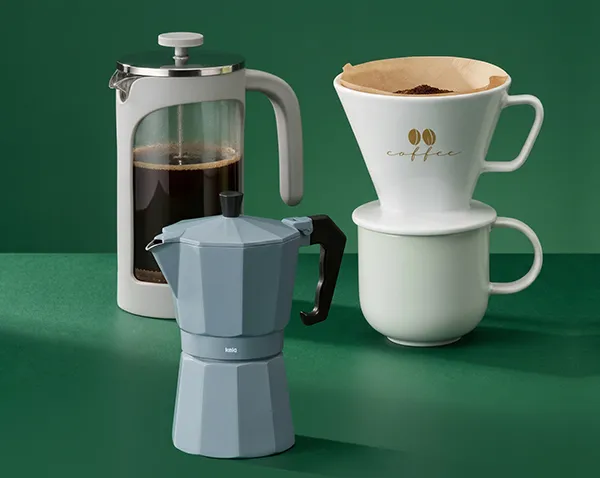
The coffee maker (French press) is one of the simplest methods of preparing coffee. The coffee grounds remain in the water throughout the entire brewing process and are only separated from the finished coffee at the end using the plunger. This preserves more of the coffee’s natural oils in the drink than, for example, with a paper filter. The result is a particularly full-bodied flavour and rich aroma.
✓full-bodied coffee
✓ several cups at once
✓ uncomplicated preparation
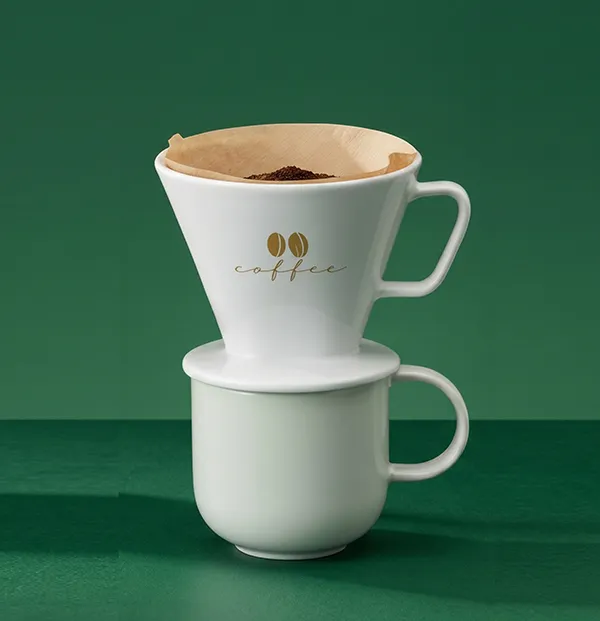
Pour-over coffee stands for a mindful and consistent way of preparing coffee. Hot water is slowly poured by hand over the coffee grounds, allowing the flavours to be extracted step by step. This gives you good control over the brewing process.
Unlike a French press, most of the natural coffee oils and fine particles are retained by the paper filter when using a pour-over. This gives the coffee a particularly clean and balanced taste while bringing out the delicate flavours of the beans.
Ideal for:
✓ delicate flavours
✓ clean coffee notes
✓ manual preparation
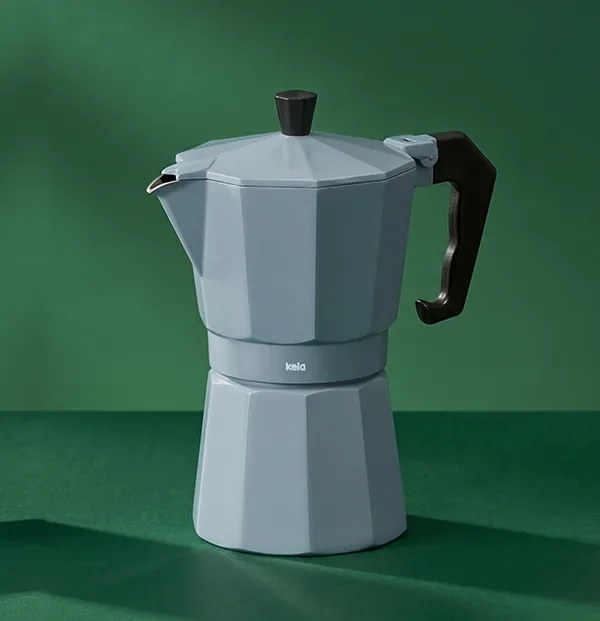
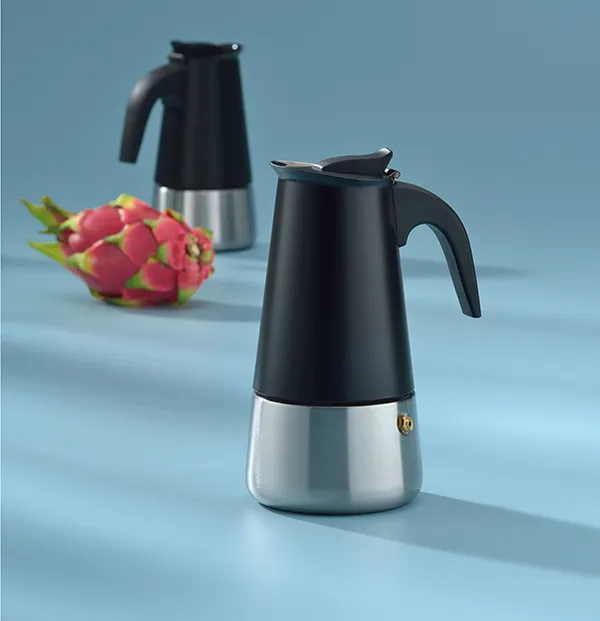
A stovetop espresso maker prepares coffee using water pressure. When heated, the hot water rises through the coffee grounds into the upper chamber, extracting the flavours along the way. The result is a strong, intense coffee that is also an excellent base for cappuccino or latte macchiato. Compared with pour-over coffee and a French press, it produces a particularly concentrated flavour. Although the coffee resembles espresso, a stovetop espresso maker operates at significantly lower pressure than a traditional espresso machine.
Ideal for:
✓ strong, espresso-style coffee
✓ small quantities of coffee
✓ cappuccino and latte macchiato