How to Use a Stovetop Espresso Maker Properly
Step by step to a delicious, aromatic espresso.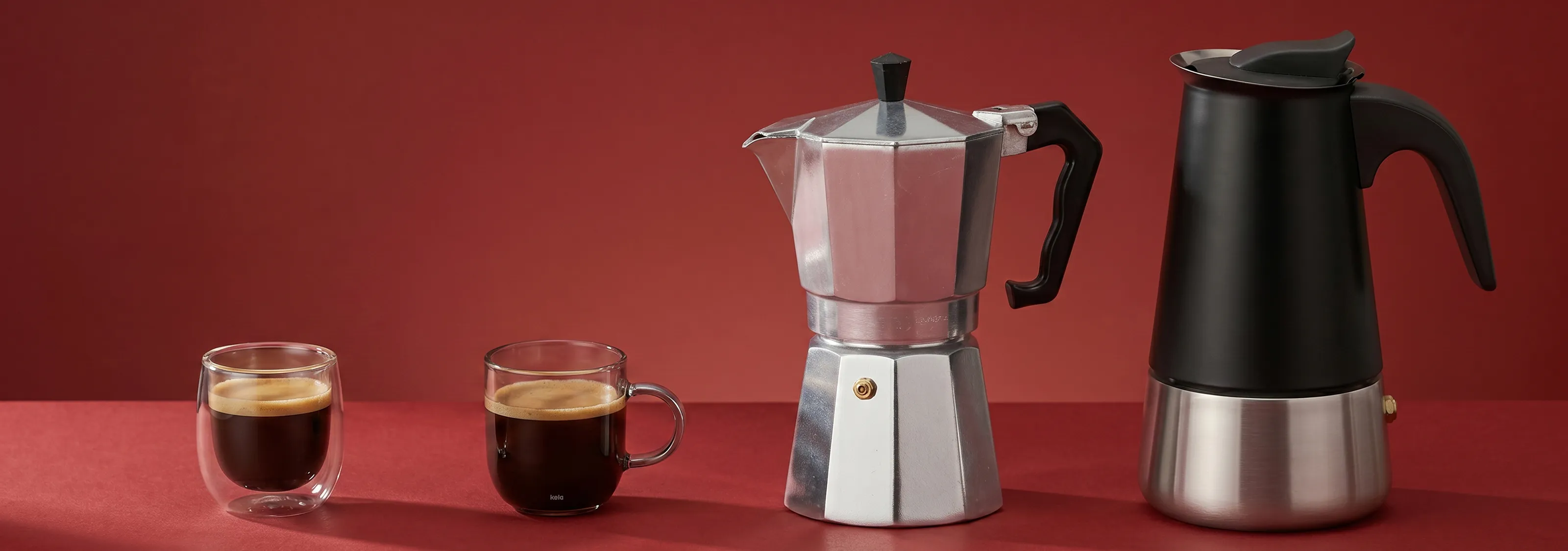
No products found.
Every Cup Starts with the Right Preparation
A stovetop espresso maker brings an Italian coffee experience straight into your own kitchen. With just a few simple steps, you can make a strong, aromatic coffee that is delicious on its own or as a base for cappuccino and latte macchiato. Getting the preparation right is key. From the amount of water and grind size to the right stovetop temperature, even small details can make a big difference. In this guide, we show you step by step how to use your stovetop espresso maker correctly and which common mistakes to avoid.
How Does a Stovetop Espresso Maker Work?
A stovetop espresso maker consists of three parts: the water chamber, the filter basket for the ground coffee and the upper collection chamber. When heated, steam develops and creates pressure, pushing the hot water upwards through the ground coffee. The brewed coffee then collects in the upper chamber. Unlike an espresso machine with a portafilter, a stovetop espresso maker operates at significantly lower pressure. The result is therefore not a classic espresso, but a strong, aromatic coffee with an intense flavour.
How to Use a Stovetop Espresso Maker –
Step by Step
Add Water
First, fill the lower chamber with fresh water up to just below the safety valve. The valve should never be covered, as it regulates the pressure. A little tip: Using warm water shortens the time on the stovetop. This means the coffee grounds are heated for less time, which can have a positive effect on the flavour.
Add the Ground Coffee
Simply fill the filter basket to the rim with your favourite ground coffee and gently level the surface. Attention: do not press it down. This is the only way the water can flow through the coffee evenly. A medium grind is ideal for a stovetop espresso maker. If the coffee is ground too finely, it can often taste bitter. If it is too coarse, it loses flavour.
Assemble and Heat the Stovetop Espresso Maker
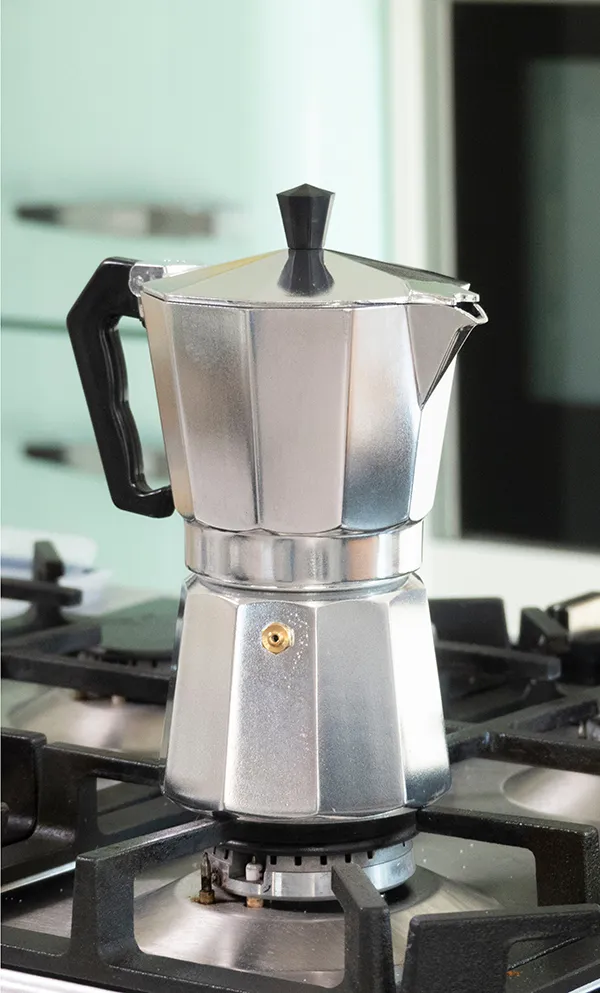
Carefully screw the upper section onto the water chamber and place the stovetop espresso maker on the cooker. Medium heat is ideal. If the heat is too high, the coffee can quickly develop a bitter taste.
Get the Timing Right
As soon as you hear the characteristic gentle bubbling and the upper chamber is full, remove the espresso maker from the heat. It is best to serve the coffee immediately rather than leaving it on the hot stovetop. This helps preserve the aroma and ensures a smooth, well-rounded flavour.
The Most Common Preparation Mistakes
Although preparing coffee with a stovetop espresso maker is straightforward, small mistakes can have a noticeable effect on the flavour. The problem is often not the coffee itself, but the grind size, temperature or how the espresso maker is handled. With the following tips, you can avoid the most common mistakes and get the best out of your stovetop espresso maker.
Coffee Ground Too Finely
A grind that is too fine is one of the most common causes of a bitter or unbalanced flavour. The water flows slowly through the coffee grounds, which can cause too many bitter compounds to be extracted. At the same time, the pressure in the stovetop espresso maker can rise more than necessary. A medium grind is ideal for a stovetop espresso maker. It falls between the fine grind used for an espresso machine with a portafilter and the coarse grind used for a French press. This allows the water to flow evenly through the coffee grounds and extract the flavours effectively.
Pressing Down the Coffee Grounds
Unlike with an espresso machine with a portafilter, the coffee grounds in a stovetop espresso maker should not be tamped down. If the grounds are compressed too firmly, the water cannot flow through them evenly. The result is often a bitter or unevenly extracted coffee. Fill the filter basket to the rim and simply level the surface. This allows the coffee’s flavours to develop properly.
Heat That Is Too High
A stovetop espresso maker should always be used over medium heat. If the temperature is too high, the water moves through the coffee grounds too quickly. This can cause delicate flavours to be lost, leaving the coffee tasting bitter or burnt. As soon as the coffee starts flowing into the upper chamber and you hear the characteristic bubbling, remove the espresso maker from the heat. This prevents overheating and helps you achieve a balanced flavour.
Aluminium or Stainless Steel? Which Stovetop Espresso Maker Is Right for You?
Both materials have their own advantages. While aluminium is associated with traditional Italian coffee preparation, stainless steel impresses with its modern appearance and high durability. Which option is right for you depends primarily on your personal preferences and the type of stovetop you use.
Aluminium Stovetop Espresso Makers
The classic choice among stovetop espresso makers. Aluminium heats up quickly and ensures even preparation. The Italia collection combines a traditional shape with modern colours and brings Italian flair to your kitchen.
Advantages:
- heats up quickly
- lightweight
- classic design
- available in various colours
Stainless Steel Stovetop Espresso Makers
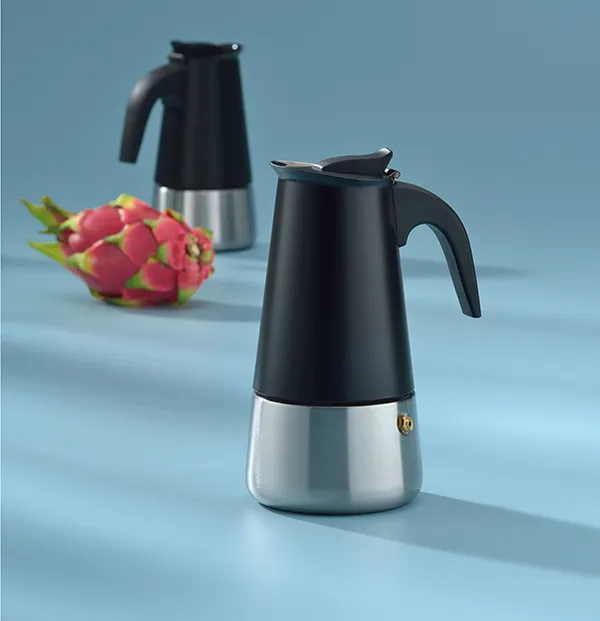
Stainless steel stands for durability and timeless style. The Ferrara espresso maker is available in two sizes and is ideal for anyone looking for a robust, easy-care model.
Advantages:
- particularly durable
- easy to clean
- neutral taste
- modern look